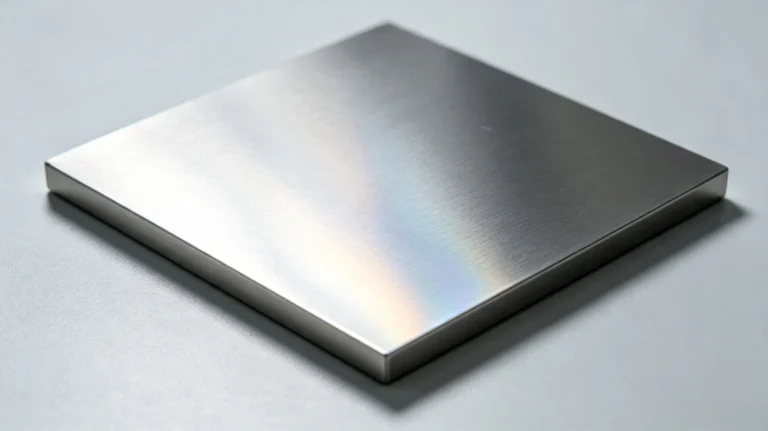
Professional Kitchenware And Tableware Manufacturing
Support OEM and bulk orders available

Understanding 201, 304 and 316 Stainless Steel: Differences, Applications and Common Misconceptions
The term “stainless steel” is easily misleading. We see it labeled on thermos cups, kitchen sinks, screws, and door handles, giving people the impression that all stainless steel materials are identical and rust-proof. However, when it comes to product selection, procurement, and failure analysis, the huge differences between 201, 304, and 316 stainless steel become prominent. Some stainless steel works perfectly indoors but develops rust spots in humid kitchens; some performs well in daily use but fails to stay stable in coastal, swimming pool and salt-containing environments; some high-priced grades are not universally suitable for all products.
Essentially, stainless steel does not mean steel that never rusts. It refers to steel with superior rust and corrosion resistance. The core distinctions among 201, 304 and 316 stainless steel lie in their chemical compositions, corrosion resistance and applicable service environments.
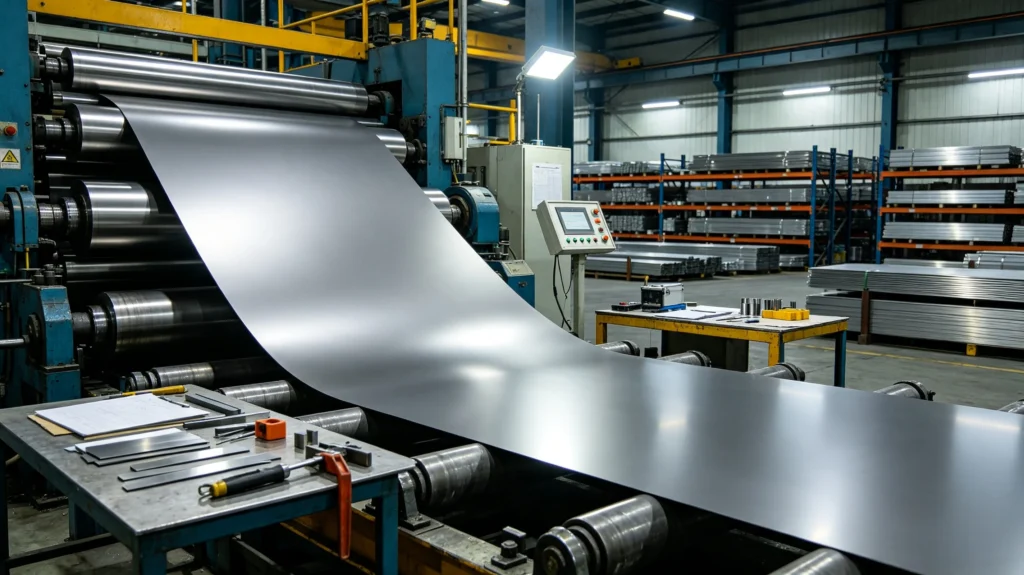
Why Does Stainless Steel Still Rust?
The rust-resistant property of stainless steel relies on a thin passivation film formed spontaneously on its surface. Serving as a protective barrier, this film slows down the oxidation and corrosion of the metal substrate. Nevertheless, this protection is not invincible. Multiple factors can damage the passivation film, including salt and chloride ions, acid and alkaline substances, long-term humidity, welding defects, surface scratches, water accumulation in gaps, and residual detergent. Under harsh environmental conditions or when improper steel grades are selected, stainless steel will suffer from rust spots, pitting corrosion, discoloration and even cracking. Therefore, stainless steel selection should never be judged by surface brightness, weight or magnetism, but by its actual service environment.
Characteristics and Application Scenarios of 201, 304 and 316 Stainless Steel
201 Stainless Steel: Cost-Effective Grade for Mild Environments
201 stainless steel is an economical alternative material. It partially replaces nickel with manganese and nitrogen elements, resulting in a lower cost than 304 stainless steel. With a bright surface finish, it is widely used for decorative parts, indoor hardware and other low-corrosion scenarios. However, its corrosion resistance is significantly inferior to 304. It is prone to rusting in humid, salty, acidic environments or places with excessive detergent residue. 201 stainless steel is usable for low-demand scenarios but is not a universal solution for all stainless steel applications.
304 Stainless Steel: Universal Grade for Daily and General Industrial Use
As the most common austenitic stainless steel, 304 balances excellent corrosion resistance, processability, stable supply and moderate cost, making it the mainstream choice for daily products. It is widely applied in kitchen utensils, thermos cup liners, food processing equipment, home appliance components and standard fasteners. Though not the highest-grade stainless steel, 304 boasts outstanding versatility and fully meets the demands of ordinary indoor environments, kitchen scenarios and general food-contact applications. Still, it cannot withstand harsh conditions such as coastal salt spray, swimming pool disinfection environments, chloride-rich media and strong corrosive scenarios.
316 Stainless Steel: High-Performance Grade for Chloride-Containing Harsh Environments
Compared with 304, 316 stainless steel is upgraded with molybdenum addition, which greatly enhances its pitting corrosion resistance in chloride-containing environments. It is the preferred material for coastal hardware, chemical equipment, medical devices, swimming pool facilities and marine parts. It is critical to note that 316 is not completely rust-proof either. Long-term exposure to high salinity, high temperature, accumulated water in structural gaps, detergent residue and defective welding can still cause corrosion. It is designed for harsh working conditions and is unnecessary for ordinary daily products.
Practical Product Application Differences
1. Thermos cups and tableware: 304 stainless steel is the most common material for inner liners and food-contact parts, while some high-end products adopt 316. For daily drinking and tableware use, the steel grade is not the only criterion. Food contact compliance, welding treatment, polishing quality and daily cleaning methods are equally important for safe and stable use.
2. Kitchen sinks and hardware: Kitchen environments feature long-term exposure to water, salt, sauce, detergents and humid air. 304 is far more stable than 201 for kitchen use, but it may still develop rust due to residual detergent, accumulated water and surface iron contamination. The service life of sinks also depends on plate thickness, stamping technology, welding process and surface treatment.
3. Outdoor railings, door handles and screws: 201 and 304 are both applicable for ordinary indoor scenarios. For outdoor facilities exposed to rain, coastal areas and acid rain environments, 304 is the conventional choice, while 316 is required for more severe corrosive conditions. Even small screws with improper material selection may rust earlier than large structural components.
4. Coastal, swimming pool and chemical environments: These scenarios magnify the performance gaps among different stainless steel grades. Chloride ions and salt spray accelerate pitting corrosion, making 304 insufficiently stable. 316 or higher-grade stainless steel is highly recommended for such harsh conditions. Meanwhile, regular maintenance, gap cleaning and standardized welding are still essential even for 316 applications.
Core Selection Principle
The priority of stainless steel selection should follow three steps: first, evaluate whether the environment contains salt, chlorine, acid, alkali or persistent humidity; second, confirm whether the product involves food contact or safety-related requirements; finally, compare the cost differences among 201, 304 and 316 to select the most cost-effective material.
Common Misconceptions About Stainless Steel
Misconception 1: Stainless steel grades can be identified by magnets. This method is completely unreliable. Austenitic stainless steel such as 304 and 316 is generally weakly magnetic, but magnetism may be generated after cold processing, stamping and welding. The magnetic performance of 201 stainless steel is also unstable. Accurate grade identification relies on material certificates, professional testing and component analysis rather than magnetic judgment.
Misconception 2: All 304 stainless steel is food-grade. 304 is a common food-contact stainless steel material, but the steel grade alone cannot guarantee food safety compliance. Qualification depends on specific industry standards, surface treatment, welding quality, cleaning process and product application scenarios. Material labels can never replace official test reports.
Misconception 3: 316 stainless steel never rusts. Although 316 has better chloride corrosion resistance than 304, it is not immune to corrosion. Seawater, salt spray, swimming pool disinfectants, gap water accumulation, high temperature and poor welding can all cause corrosion damage. 316 offers superior performance but does not eliminate the need for daily maintenance.
Misconception 4: Thicker stainless steel is more rust-resistant. Plate thickness mainly affects the material’s strength, deformation resistance and service life, rather than its corrosion resistance. A thin 316 stainless steel sheet can be more stable than a thick 201 sheet in corrosive environments. Corrosion resistance is primarily determined by steel grade, surface condition, service environment and manufacturing process.