Professional Kitchenware And Tableware Manufacturing
Support OEM and bulk orders available

Corrosion Resistance Mechanisms of 304 and 316 Stainless Steel
The so-called “stainless” property of steel does not mean the material is completely immune to corrosion. Instead, it refers to its exceptional chemical stability under specific service environments. The outstanding corrosion resistance of 304 and 316 stainless steel fundamentally stems from an ultra-thin, dense, and transparent protective film spontaneously formed on their surfaces, which is defined as the passivation film.
1. Formation and Essence of the Passivation Film
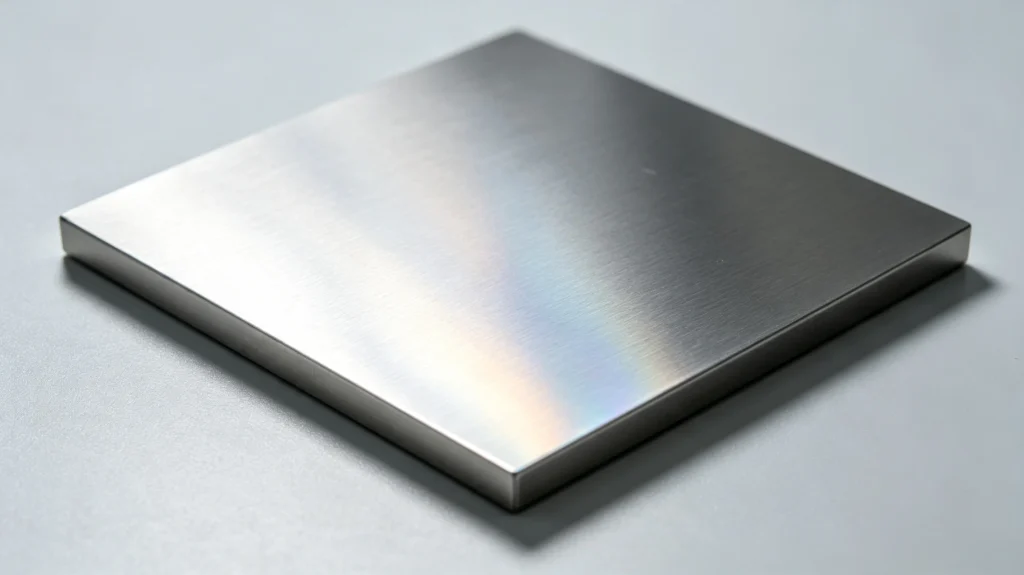
Numerous studies have verified that the superior corrosion resistance of stainless steel is primarily attributed to the in-situ formed passivation film. This film is a thin and inert oxide layer, mainly composed of chromium oxide (Cr₂O₃), with trace chromium hydroxide (Cr(OH)₃) included in most cases. The formation of the passivation film is a thermodynamically spontaneous reaction.
When stainless steel is exposed to air or oxygen-containing environments, the chromium element within the metal matrix rapidly reacts with oxygen. The resulting chromium oxide layer features high density and chemical inertness, which can effectively block the further diffusion of oxygen and water molecules toward the metal substrate. This process cuts off the anodic reaction pathway of the corrosion cell, thereby preventing metal corrosion.
Different from the loose and porous iron oxide (Fe₂O₃) layer formed on ordinary carbon steel, the Cr₂O₃ passivation film on stainless steel is extremely thin, usually ranging from several nanometers to tens of nanometers, and is completely transparent to the naked eye. The existence of this film converts the metal surface from an active dissolution state to a passive state, endowing the material with chemical inertness under specific conditions.
2. Self-healing Performance of the Passivation Film
One of the most distinctive properties of the passivation film is its unique self-healing capability. Research confirms that even if the film is mechanically scratched or partially damaged, it can repair itself instantly as long as sufficient oxygen exists in the surrounding environment. The internal chromium element will immediately react with oxygen to regenerate a complete passivation film and cover the damaged area. This dynamic self-repair mechanism is the core reason why stainless steel can maintain a bright and corrosion-free surface for a long time.
3. Auxiliary Functions of Alloying Elements
316 stainless steel is an upgraded material developed on the basis of 304 stainless steel, and its most essential improvement is the addition of molybdenum. Although chromium is the decisive element for passivation film formation in both 304 and 316 stainless steel, other alloying elements play vital auxiliary roles in corrosion resistance.
Nickel, a common element in both materials, serves as an austenite stabilizer. It not only optimizes the mechanical properties of stainless steel but also enhances the structural stability of the passivation film, effectively improving the film’s corrosion resistance in reducing media.
For 316 stainless steel, the addition of molybdenum fundamentally optimizes the properties of the passivation film. Relevant studies have proven that molybdenum can significantly strengthen the stability of the passivation film, especially in halogen salt-containing environments. It also inhibits pitting corrosion, accelerates the repassivation of damaged passivation films, and greatly improves the overall corrosion resistance of the material.
4. Performance Limitations of 304 Stainless Steel and Advantages of 316 Stainless Steel
4.1 Limitations of 304 Stainless Steel
304 stainless steel exhibits obvious defects in chloride-containing environments, including marine atmosphere, de-icing salt environments, and swimming pool environments. Chloride ions feature small ionic radius and strong penetration ability. They can adsorb on the surface of the passivation film, displace oxygen atoms, and cause local damage to the film, eventually forming pitting corrosion pits and crevice corrosion on the metal surface. This shortcoming greatly limits the service life of 304 stainless steel in harsh corrosive environments.
4.2 Core Advantages of 316 Stainless Steel
Benefiting from the addition of molybdenum, 316 stainless steel shows far better corrosion resistance than 304 stainless steel in chloride-rich environments such as seawater and salt water, as well as strong acid environments. The enrichment of molybdenum in the passivation film and its repassivation effect on damaged film areas are the key to resisting chloride erosion, which can be specifically summarized into three aspects:
First, it enhances passivation film stability. Molybdenum species enriched in the passivation film of 316 stainless steel can modify the semiconductor properties of the film and reduce the density of point defects inside the film, thereby blocking the invasion of chloride ions and improving the structural stability of the protective layer in halogen salt environments.
Second, it promotes film repassivation. When local damage occurs to the passivation film, molybdenum can inhibit the further expansion of pitting corrosion. According to relevant theories, molybdenum can form protective molybdate or molybdenum-rich oxide layers at active dissolution sites, quickly covering the exposed metal matrix and realizing rapid repassivation.
Third, it increases the pitting potential. Electrochemical test results show that molybdenum-containing stainless steel has a higher pitting potential, which means harsher environmental conditions are required to trigger electrochemical corrosion, effectively improving the material’s pitting corrosion resistance.
5. Conclusion
The stainless property of 304 and 316 stainless steel originates from the dense chromium oxide passivation film induced by chromium elements. This nanoscale protective layer endows the metal with chemical inertness and reversible self-healing ability in specific environments.
As a basic austenitic stainless steel, 304 stainless steel with a balanced composition of 18% chromium and 8% nickel possesses excellent universal corrosion resistance and processability, which meets most conventional daily and industrial application requirements. However, the absence of molybdenum makes it incompetent in chloride-eroded environments.
By adding 2% to 3% molybdenum, 316 stainless steel achieves a key performance upgrade over 304 stainless steel. Molybdenum optimizes the composition and microstructure of the passivation film, and significantly improves the material’s resistance to pitting and crevice corrosion in chloride-containing media. Owing to this unique performance advantage, 316 stainless steel has become the preferred material for harsh service scenarios such as marine engineering and chemical industrial environments.